.png)
Virtual Reality in Property Sales
- Traci Fowler

- Jun 17
- 2 min read
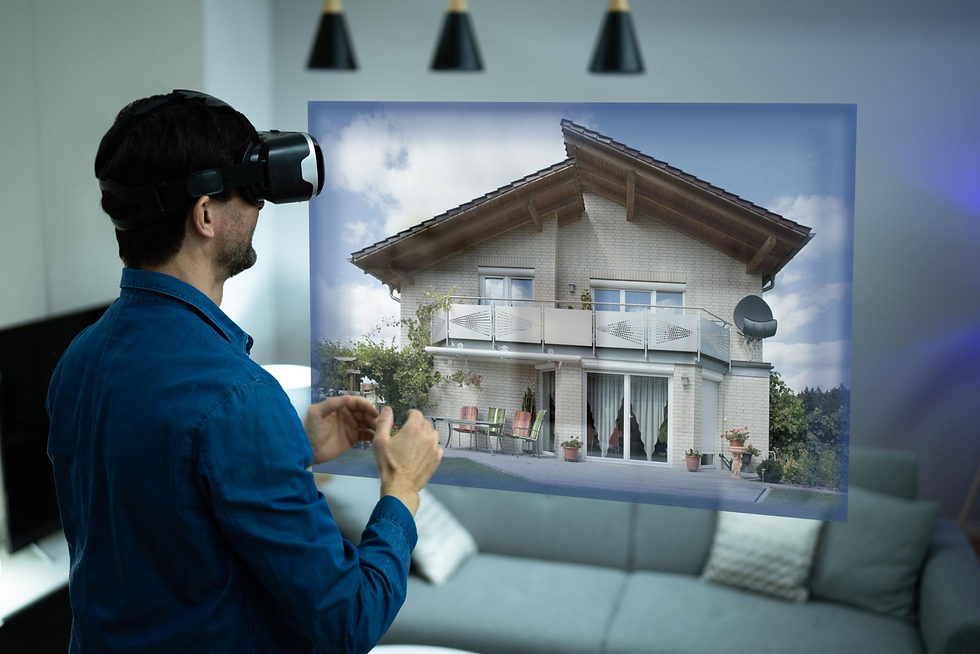
Virtual reality (VR) is transforming the real estate industry by allowing buyers to experience properties in an immersive and interactive way without being physically present. This technology helps save time, expand market reach, and improve decision-making for both buyers and sellers.
What Is Virtual Reality in Real Estate?
Virtual reality uses specialized software and, in some cases, VR headsets to create realistic digital walkthroughs of properties. Buyers can virtually move through rooms, inspect layouts, and explore a home's features from almost anywhere.
Benefits for Homebuyers
Tour Properties From Anywhere
VR allows buyers, especially those relocating or purchasing internationally, to explore homes without traveling.
Save Time During the Search Process
Buyers can narrow down their options before scheduling in-person visits.
Better Understand the Space
VR provides a stronger sense of room dimensions, traffic flow, and overall layout compared to traditional photos.
Make More Confident Decisions
Interactive experiences help buyers feel more informed before making significant financial decisions.
Benefits for Sellers and Agents
Reach More Potential Buyers
Properties become accessible to audiences beyond the local market.
Create More Engaging Listings
Immersive experiences often attract more interest than static images alone.
Reduce Unnecessary Showings
Qualified buyers can be identified earlier in the process.
Market New Developments Before Construction
Builders can showcase properties that are still being planned or built.
Technologies Commonly Used
360-degree photography
3D property scans
Digital floor plans
Interactive virtual staging
VR headsets and mobile VR experiences
Challenges to Consider
Initial setup costs can be significant.
Some buyers still prefer physical tours.
High-quality content creation requires specialized equipment.
Internet speed and device compatibility may affect the experience.
Virtual reality is becoming an important tool in modern property sales by making home shopping more accessible, engaging, and efficient while complementing traditional in-person experiences.


Comments